


Reasoning Practice Question and Answer
8- Show AnswerHide Answer
- Workspace
- SingleChoice
Answer : 1. "Only H"
Q: If MAIL is coded KYGJ, then how is LETTER coded?
1695 0618b9de4cbb30050eff1e2cb
618b9de4cbb30050eff1e2cb- 1NGTTTGfalse
- 2NGTTGTfalse
- 3JCRRCPtrue
- 4JCRRPCfalse
- Show AnswerHide Answer
- Workspace
- SingleChoice
Answer : 3. " JCRRCP"
Q:Directions: Study the following information carefully and answer the questions that follow.
Eight people – Aishwarya, Kavya, Surabhi, Sangeetha, Shruthi, Swathi, Anita and Meghana were born in different years 1983, 1988, 1991, 1993, 1996, 2000, 2006 and 2012 not necessarily in the same order. Kavya’s age is a multiple of 5. Three people were born between Kavya and Meghana. Swathi is born before Kavya, but she is not the eldest person. Four people were born between Swathi and Anita, who is not the youngest person. Surabhi was born just before Aishwarya. Only one person was born between Sangeetha and Shruthi. Sangeetha is not the youngest person.
Note:
(1) All calculations are done with respect to the present year, 2021 assuming the month and date to be same as that of the years as mentioned above.
(2) Each person is assumed to born on the same date and same month of the respective years.
How many people are born between Sangeetha and Meghana?
1695 064df3a80ad4e6a1a0b6b7a0d
64df3a80ad4e6a1a0b6b7a0dEight people – Aishwarya, Kavya, Surabhi, Sangeetha, Shruthi, Swathi, Anita and Meghana were born in different years 1983, 1988, 1991, 1993, 1996, 2000, 2006 and 2012 not necessarily in the same order. Kavya’s age is a multiple of 5. Three people were born between Kavya and Meghana. Swathi is born before Kavya, but she is not the eldest person. Four people were born between Swathi and Anita, who is not the youngest person. Surabhi was born just before Aishwarya. Only one person was born between Sangeetha and Shruthi. Sangeetha is not the youngest person.
(2) Each person is assumed to born on the same date and same month of the respective years.
- 1Onefalse
- 2Threefalse
- 3Fourtrue
- 4Twofalse
- 5Nonefalse
- Show AnswerHide Answer
- Workspace
- SingleChoice
Answer : 3. "Four"
Q: Complete the following series.
2, 5, 26, ?
1694 05f9296ef5f56da1ed8503ac2
5f9296ef5f56da1ed8503ac22, 5, 26, ?
- 1674false
- 2677true
- 3635false
- 4678false
- Show AnswerHide Answer
- Workspace
- SingleChoice
Answer : 2. "677"
Q: Find the missing number in the given series.
1, 3, 9, 31, ___ 651
1694 160264c33272454043d90bb11
60264c33272454043d90bb111, 3, 9, 31, ___ 651
- 1129true
- 2109false
- 3127false
- 487false
- Show AnswerHide Answer
- Workspace
- SingleChoice
Answer : 1. "129"
Q: Question Figure
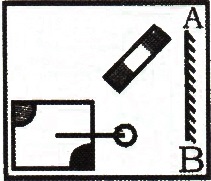
1693 05f86d18b8a599d39499c19ad
5f86d18b8a599d39499c19ad- 1false

- 2false
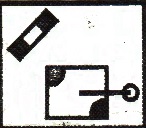
- 3true
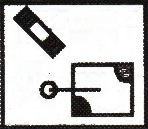
- 4false
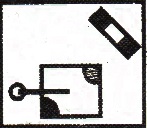
- Show AnswerHide Answer
- Workspace
- SingleChoice
Answer : 3. "
"
Q:Directions: In each question of below are two / three statements followed by two conclusions numbered I and II . You have to take the two / three given statements. to be true even if they seem to be at variance from commonly known facts and then decide which of the given conclusions logically follows from the given statements disregarding commonly known facts.
Give answer
(1) If only conclusion I follows
(2) If only conclusion II follows
(3) If either conclusion I or conclusion II follows
(4) If neither conclusion I nor conclusion II follows
(5) If both conclusion I and conclusion II follow
Statements:
All solids are liquids.
All liquids are gases.
No gas is plasma.
Conclusions:
I. All solids are gases.
II. No liquid is plasma.
1693 05dee162a9a104d77423a70b1
5dee162a9a104d77423a70b1Give answer
(1) If only conclusion I follows
(2) If only conclusion II follows
(3) If either conclusion I or conclusion II follows
(4) If neither conclusion I nor conclusion II follows
(5) If both conclusion I and conclusion II follow
All solids are liquids.
All liquids are gases.
No gas is plasma.
Conclusions:
I. All solids are gases.
II. No liquid is plasma.
- 11false
- 22false
- 33false
- 44false
- 55true
- Show AnswerHide Answer
- Workspace
- SingleChoice
Answer : 5. "5"
Q: Vivek and Ashoka start walking from a certain place. Vivek walks 3 km towards north and turns right and walks 4 km. Ashoka turns 5 km towards west and turns to right and walks 3 km. Now how far are they from each other?
1693 05f041ddf26cfc348bd6cbe69
5f041ddf26cfc348bd6cbe69- 110 kmfalse
- 28 kmfalse
- 39 kmtrue
- 46 kmfalse
- Show AnswerHide Answer
- Workspace
- SingleChoice