


Reasoning Practice Question and Answer
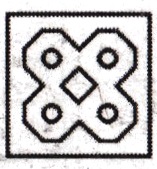
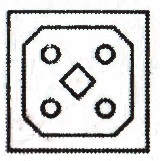
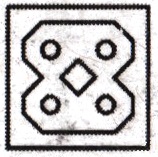
8 Q: Direction: In the question figures below, a piece of paper is folded and cut as shown below. Find out from the answer figures how it will appear when opened.
Question figure
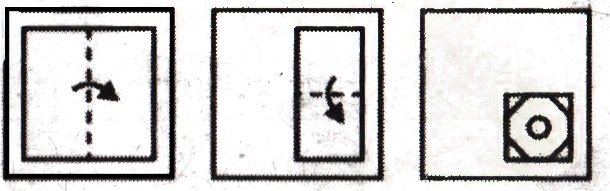
1611 05f732ed7b0614b4cd7854569
5f732ed7b0614b4cd7854569Question figure
- 1true
- 2false
- 3false
- 4false
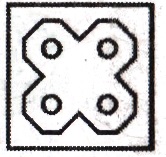
- Show AnswerHide Answer
- Workspace
- SingleChoice
Answer : 1. "
"
Q: S is the sister of T. R is the brother of S. U is the wife of W. T is the father of U. How is T related to W?
1611 06465c541c899b466f454cfd8
6465c541c899b466f454cfd8- 1Father in lawtrue
- 2Sonfalse
- 3Fatherfalse
- 4Maternal Unclefalse
- Show AnswerHide Answer
- Workspace
- SingleChoice
Answer : 1. "Father in law"
Q: Statement:
Some trees are flowers.
Some flowers are roots.
Some roots are stems.
conclusion :
I. Some trees are stems.
II. Some roots are not flowers.
1611 16034829d091a916d245e83a4
6034829d091a916d245e83a4Some trees are flowers.
Some flowers are roots.
Some roots are stems.
conclusion :
I. Some trees are stems.
II. Some roots are not flowers.
- 1Conclusion I followsfalse
- 2Conclusion II follows.false
- 3Both conclusions follow.false
- 4Both conclusions do not follow.true
- Show AnswerHide Answer
- Workspace
- SingleChoice
Answer : 4. "Both conclusions do not follow."
Q: 6 : 35 : : 7 : ?
1610 05fc5e613a5adbb0808d61ed8
5fc5e613a5adbb0808d61ed8- 134false
- 213false
- 348true
- 442false
- Show AnswerHide Answer
- Workspace
- SingleChoice
Answer : 3. "48"
Q:Directions: In each question of below are two / three statements followed by two conclusions numbered I and II . You have to take the two / three given statements. to be true even if they seem to be at variance from commonly known facts and then decide which of the given conclusions logically follows from the given statements disregarding commonly known facts.
Give answer
(1) If only conclusion I follows
(2) If only conclusion II follows
(3) If either conclusion I or conclusion II follows
(4) If neither conclusion I nor conclusion II follows
(5) If both conclusion I and conclusion II follow
Statements:
All kites are birds.
No kite is a glider.
Conclusions:
I. Some gliders are definitely not birds.
II . At least some birds are kites.
1610 05dedfb7022e1f216eb0abb1a
5dedfb7022e1f216eb0abb1aGive answer
(1) If only conclusion I follows
(2) If only conclusion II follows
(3) If either conclusion I or conclusion II follows
(4) If neither conclusion I nor conclusion II follows
(5) If both conclusion I and conclusion II follow
All kites are birds.
No kite is a glider.
Conclusions:
I. Some gliders are definitely not birds.
II . At least some birds are kites.
- 11false
- 22true
- 33false
- 44false
- 55false
- Show AnswerHide Answer
- Workspace
- SingleChoice
Answer : 2. "2"
Q: Select the option that is related to the third word in the same way as the second word is related to the first word. (The words must be considered as meaningful English words and must not be related to each other based on the number of letters/number of consonants/vowels in the word.)
Movie: Director :: Orchestra: ?
1610 064be5b1fc3da05b2214a7009
64be5b1fc3da05b2214a7009Movie: Director :: Orchestra: ?
- 1Choreographerfalse
- 2Conductortrue
- 3Dancerfalse
- 4Audiencefalse
- Show AnswerHide Answer
- Workspace
- SingleChoice
Answer : 2. "Conductor"
Q:Instructions Directions: Study the information and answer the following questions.
In a certain code language 'economics is not money' is written as 'ka la ho ga', 'demand and supply economics' is written as 'mo ta pa ka', 'money makes only part' is written as 'zi la ne ki' and 'demand makes supply economics' is written as 'zi mo ka ta'.
What is the code for 'makes' in the given code language?
1610 05e747335c8bf4623349fb11c
5e747335c8bf4623349fb11cIn a certain code language 'economics is not money' is written as 'ka la ho ga', 'demand and supply economics' is written as 'mo ta pa ka', 'money makes only part' is written as 'zi la ne ki' and 'demand makes supply economics' is written as 'zi mo ka ta'.
- 1mofalse
- 2pafalse
- 3nefalse
- 4zitrue
- 5hofalse
- Show AnswerHide Answer
- Workspace
- SingleChoice
Answer : 4. "zi "
Q:Directions : Study the following information and answer the questions given :
Seven people - A, B , C , D , E , F and G are sitting in a circle . Five of them are facing the centre while two of them are facing opposite to the centre. C sits third to the left of D and both are facing the centre. E is neither an immediate neighbour of D nor of C. The one sitting exactly between D and F is facing opposite to the centre. G sits third to the right of A and G is facing the centre. One of B ' s neighbour is facing opposite to the centre.
Who is sitting second to the left of A?
1610 05da036780ba8fe2a19c1becb
5da036780ba8fe2a19c1becbSeven people - A, B , C , D , E , F and G are sitting in a circle . Five of them are facing the centre while two of them are facing opposite to the centre. C sits third to the left of D and both are facing the centre. E is neither an immediate neighbour of D nor of C. The one sitting exactly between D and F is facing opposite to the centre. G sits third to the right of A and G is facing the centre. One of B ' s neighbour is facing opposite to the centre.
- 1Cfalse
- 2Gfalse
- 3Efalse
- 4Btrue
- 5None of thesefalse
- Show AnswerHide Answer
- Workspace
- SingleChoice