


Reasoning Practice Question and Answer
8 Q: Read the given statements and conclusions carefully. Assuming that the information given in the statements is true, even if it appears to be at variance with commonly known facts, decide which of the given conclusions logically follow(s) from the statements.
Statements:
I. Some blue are red.
II. Some green are red.
Conclusions:
I. No blue is green.
II. No red is green.
1567 0642127e232185cce37033fa5
642127e232185cce37033fa5- 1Only conclusion I followsfalse
- 2Both conclusions I and II followfalse
- 3Only conclusion II followsfalse
- 4Neither conclusion I nor II followstrue
- Show AnswerHide Answer
- Workspace
- SingleChoice
Answer : 4. "Neither conclusion I nor II follows"
Q:Direction: Study the following information carefully and answer the questions given below:
Eight persons A, B, C, D, E, F, G and H are sitting around a rectangular table in such a way that four persons sit on each of the four corner of the table and other four persons sit on the middle of each side. The one who sits at the corner of table faces outside the center of table and the one who sits at the middle side of table faces towards the center of table. Persons sitting on opposite sides are exactly opposite to each other.
F sits at one of the middle side of the table. Two persons sit between F and E. Only one person sits between F and C. E does not sit near to C. Either A sits 2nd to the left of H or 2nd right of H. One person sits between A and C. B and G sit opposite to each other. D sits 2nd to the left of B. G doesn’t sit next to F.
Who among the following faces to C?
1567 0603ca954e759ac364c88edd9
603ca954e759ac364c88edd9Eight persons A, B, C, D, E, F, G and H are sitting around a rectangular table in such a way that four persons sit on each of the four corner of the table and other four persons sit on the middle of each side. The one who sits at the corner of table faces outside the center of table and the one who sits at the middle side of table faces towards the center of table. Persons sitting on opposite sides are exactly opposite to each other.
F sits at one of the middle side of the table. Two persons sit between F and E. Only one person sits between F and C. E does not sit near to C. Either A sits 2nd to the left of H or 2nd right of H. One person sits between A and C. B and G sit opposite to each other. D sits 2nd to the left of B. G doesn’t sit next to F.
- 1Htrue
- 2Bfalse
- 3Gfalse
- 4Efalse
- 5None of thesefalse
- Show AnswerHide Answer
- Workspace
- SingleChoice
Answer : 1. "H"
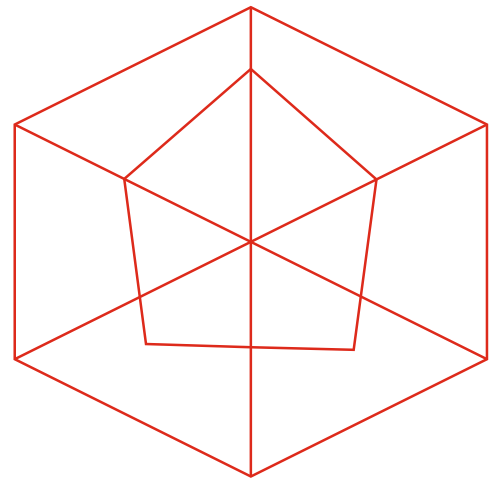
Q: Find the number of triangles in the given figure?
1567 05fe1ebb415a8d94b058e1f1c
5fe1ebb415a8d94b058e1f1c- 115false
- 210true
- 318false
- 420false
- Show AnswerHide Answer
- Workspace
- SingleChoice
Answer : 2. "10"
Explanation :
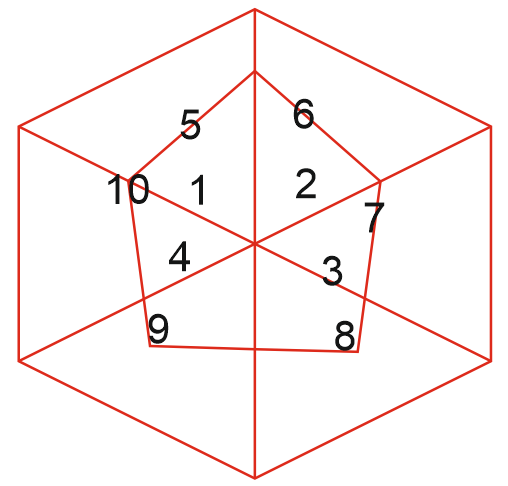 Total no. of triangles = 10.
Q: The number of colourless cubes are?
1567 05f574c5edf171125cbc38348
5f574c5edf171125cbc38348- 125false
- 24false
- 38true
- 427false
- Show AnswerHide Answer
- Workspace
- SingleChoice
Answer : 3. "8 "
Q: Select the option that is related to the fifth number in the same way as the second number is related to the first number and fourth number is related to third number.
121 : 145 :: 49 : 65 :: 169 :?
1566 05fc4bc034f2f6c622b001605
5fc4bc034f2f6c622b001605121 : 145 :: 49 : 65 :: 169 :?
- 1193false
- 2197true
- 3196false
- 4198false
- Show AnswerHide Answer
- Workspace
- SingleChoice
Answer : 2. "197"
Q: 6 : 8 :: 3 : ?
1566 05fc613e10cb33424ae85c278
5fc613e10cb33424ae85c278- 16false
- 28false
- 32false
- 44true
- Show AnswerHide Answer
- Workspace
- SingleChoice
Answer : 4. "4"
Q:Directions: Few persons were seated in 3 different rows facing the north. The rows were numbered 1-3 such that the last row was numbered 1, the row exactly in front of it was numbered 2 and so on. The seats were numbered 1, 2, 3 and so on in ascending order from left to right. All rows did not necessarily have the same number of seats. The information about only few persons is known.
(i) S’s seat number was one less than as that his row number.
(ii) S was 2nd to the left of K. Nobody was seated to the right of N.
(iii) Row-1 had 6 seats.
(iv) T was seated at one of the extreme ends but not adjacent to R .
(v) Row 3 had one seats more than that in row 2.
(vi) M was 3rd to the left of P. M and P was not seated any extreme end of the row.
(vii) R was seated behind M, they had the same seat number but they were not in consecutive rows.
(viii) M not seated with N and T.
(ix) The maximum number of seats was six in any row.
How many persons could be there in the rows?
1566 05df73c9ee2d9352b4945f068
5df73c9ee2d9352b4945f068(i) S’s seat number was one less than as that his row number.
(ii) S was 2nd to the left of K. Nobody was seated to the right of N.
(iii) Row-1 had 6 seats.
(iv) T was seated at one of the extreme ends but not adjacent to R .
(v) Row 3 had one seats more than that in row 2.
(vi) M was 3rd to the left of P. M and P was not seated any extreme end of the row.
(vii) R was seated behind M, they had the same seat number but they were not in consecutive rows.
(viii) M not seated with N and T.
(ix) The maximum number of seats was six in any row.
- 115false
- 217true
- 321false
- 419false
- 523false
- Show AnswerHide Answer
- Workspace
- SingleChoice
Answer : 2. "17"
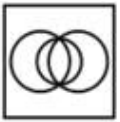
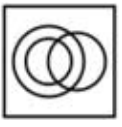
Q: Identify the diagram that best represents the relationship among the given classes.
Complex number, Integer, Natural number
1566 0605c5a443af5ff63fd6b4ae1
605c5a443af5ff63fd6b4ae1- 1false
- 2false
- 3true

- 4false
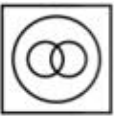
- Show AnswerHide Answer
- Workspace
- SingleChoice
Answer : 3. "
"