


Reasoning Practice Question and Answer
8 Q: Three different positions of the same dice are shown. Find the number on the face opposite to the face showing'3'.

1686 064abec84b394764d11c79451
64abec84b394764d11c79451- 15false
- 22false
- 31true
- 46false
- Show AnswerHide Answer
- Workspace
- SingleChoice
Answer : 3. "1"
Q: The number of colourless cubes are?
1686 05f574c5edf171125cbc38348
5f574c5edf171125cbc38348- 125false
- 24false
- 38true
- 427false
- Show AnswerHide Answer
- Workspace
- SingleChoice
Answer : 3. "8 "
Q:Direction: Study the following information carefully and answer the given questions.
Eight people i.e. K, L, M, N, O, P, Q, and R were born in different years i.e. 1979, 1982, 1984, 1988, 1990, 1994, 1995, and 2000 but not necessarily in the same order. (Note: Consider the base year as 2021.)
The age of P is a multiple of 13. Two people were born between P and K. The difference between the age of K and O is 4 years. One person was born between O and L who was not born in an odd-numbered year. Three people were born between L and R. The difference between the age of R and Q is 5 years. M was born after N.
How many people are younger than M?
1685 0618a421ae3b7b7409261616c
618a421ae3b7b7409261616c- 1Fourfalse
- 2Fivetrue
- 3Threefalse
- 4Sixfalse
- 5None of thesefalse
- Show AnswerHide Answer
- Workspace
- SingleChoice
Answer : 2. "Five "
Q: Question Figure

1685 05f75c14ee487e60dced046be
5f75c14ee487e60dced046be- 1false

- 2false

- 3false

- 4true

- Show AnswerHide Answer
- Workspace
- SingleChoice
Answer : 4. "
"
Q: Four numbers have been given out of which three are alike in some manner, while one is different. Choose the odd one.
1685 05fc5ee9bc074460ceb59b879
5fc5ee9bc074460ceb59b879- 191true
- 273false
- 3109false
- 461false
- Show AnswerHide Answer
- Workspace
- SingleChoice
Answer : 1. "91"
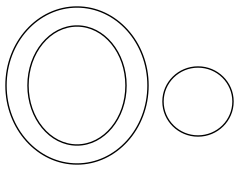
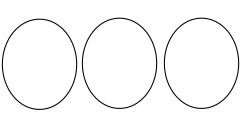
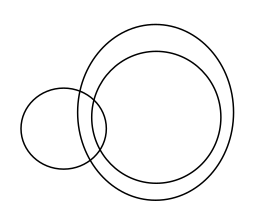
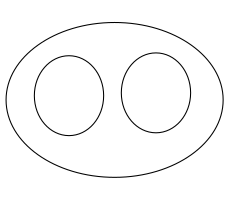
Q: Select the Venn diagram that best illustrates the relationship between the three given classes.
School, Teacher, Student
1685 060f6690bef8c4b405ca5c68f
60f6690bef8c4b405ca5c68fSchool, Teacher, Student
- 1false
- 2false
- 3false
- 4true
- Show AnswerHide Answer
- Workspace
- SingleChoice
Answer : 4. "
"
Q: Read the given statements and conclusions carefully. Assuming that the information given in the statements is true, even if it appears to be at variance with commonly known facts, decide which of the given conclusions logically follow(s) from the statements.
Statements:
I. All X are B.
II. No C is X.
Conclusions:
I. Some B are not C.
II. All C are B.
III. Some X are C
1685 0642e9ee11ce944a93e8ce565
642e9ee11ce944a93e8ce565- 1Only conclusion I followstrue
- 2None of the conclusion followfalse
- 3Only conclusions I and II followfalse
- 4Only conclusions II and III followfalse
- Show AnswerHide Answer
- Workspace
- SingleChoice
Answer : 1. "Only conclusion I follows"
Q:Directions: Each question given below consists of a statement, followed by two arguments numbered I and II. You have to decide which of the arguments is a 'strong' argument and which is a 'weak' argument.
Give answer
( a ) if only argument I is strong.
( b ) if only argument II is strong.
( c ) if either I or II is strong.
( d ) if neither I nor II is strong.
( e ) if both argument I and II are strong.
Statement:
Should fashionable dresses be banned?
Arguments:
I. Yes, fashions keep changing and hence consumption of cloth increases.
II. No, fashionable clothes are a person's self-expression and therefore his / her fundamental right.
1685 05ef3ffe37c1ec61320b562ad
5ef3ffe37c1ec61320b562adGive answer
( a ) if only argument I is strong.
( b ) if only argument II is strong.
( c ) if either I or II is strong.
( d ) if neither I nor II is strong.
( e ) if both argument I and II are strong.
Should fashionable dresses be banned?
Arguments:
I. Yes, fashions keep changing and hence consumption of cloth increases.
II. No, fashionable clothes are a person's self-expression and therefore his / her fundamental right.
- 1Afalse
- 2Btrue
- 3Cfalse
- 4Dfalse
- 5Efalse
- Show AnswerHide Answer
- Workspace
- SingleChoice