


Reasoning Practice Question and Answer
8 Q: From the following options, select the word which cannot be formed using the letters of the given word:
‘LIBERALISATION’
1487 05f46393209e4377de93e7c08
5f46393209e4377de93e7c08‘LIBERALISATION’
- 1RATIONALfalse
- 2BESTfalse
- 3RELATIONfalse
- 4RELATEtrue
- Show AnswerHide Answer
- Workspace
- SingleChoice
Answer : 4. "RELATE"
Q: Select theoption that is related to the fifth number in the same way as the second number is related to the first number and the fourth number is related to the third number.
13 : 195 :: 7 : 63 :: 18 : ?
1486 064623f820827e80a9f8e2ea3
64623f820827e80a9f8e2ea3- 1360true
- 2330false
- 3378false
- 4342false
- Show AnswerHide Answer
- Workspace
- SingleChoice
Answer : 1. "360"
Q: Directions: In the following question assuming the given statements to be true, find which of the conclusion among the given conclusions is/ are definitely true and then give your answers accordingly
Statements: H ≤ X ≤ R = O > T; Y = F ≥ R > D
Conclusions:
I. H ≥ Y
II. Y > H
1486 064f73bc84e8cccb8db0c02c3
64f73bc84e8cccb8db0c02c3- 1Only I is truefalse
- 2Only II is truefalse
- 3Either I or II is truefalse
- 4Both I and II is truefalse
- 5Neither I nor II is truetrue
- Show AnswerHide Answer
- Workspace
- SingleChoice
Answer : 5. "Neither I nor II is true"
Q:Direction: Study the following information carefully and answer the given questions. Fourteen people are sitting in 2 rows, 7 in each. P, Q, R, S, T, U, and V in row 1 facing south and A, B, C, D, E, F, and G in row 2 facing north but not necessarily in the same order. People in both rows face each other.
U is sitting third from on of the extreme ends. Two persons are sitting between the one facing U and D. Three persons are sitting between the immediate neighbor of the one who is facing D and S. E is facing the immediate neighbor of S. A is sitting to the immediate right of E. P and Q does not sit at any of the ends. Two persons are sitting between the one who is facing the immediate neighbor of P and A. At least three persons are sitting between the one facing A and Q. B is facing the one who is sitting second to the left of Q. R is neither facing E nor B. C is sitting fourth to the left of G. V is sitting to second to the right of T.
Which of the following statement is true regarding B?
1486 064ddd5cc90a003851d04b502
64ddd5cc90a003851d04b502- 1B sits at the end of the row.false
- 2B is an immediate neighbor of F.true
- 3Two persons sit between B and G.false
- 4B does not faces Vfalse
- 5None of the statement is true.false
- Show AnswerHide Answer
- Workspace
- SingleChoice
Answer : 2. "B is an immediate neighbor of F."
Q:Direction : Study the following information carefully and answer the given questions.
A, B, C, D, E, F, G and H are sitting around a circular area at equal distance between each other, but not necessarily in the same order. Some people face the centre while some face outward (i.e. in a direction opposite the centre.) B sits third to the right of E. E faces outward. Only one person sits between B and F. Both the immediate neighbours of F face outward. Only three persons sit between G and H. G is not an immediate neighbour of B. Both the immediate neighbours of D face the centre. D is not an immediate neighbour of G. Both the immediate neighbours of C face the centre. Both the immediate neighbours of E face a direction opposite that of G (i.e. if G faces the centre, then both the immediate neighbours of E face outward and vice versa).
What is G's position with respect to C?
1485 05ea65d93c5fa916f4b61dd28
5ea65d93c5fa916f4b61dd28A, B, C, D, E, F, G and H are sitting around a circular area at equal distance between each other, but not necessarily in the same order. Some people face the centre while some face outward (i.e. in a direction opposite the centre.) B sits third to the right of E. E faces outward. Only one person sits between B and F. Both the immediate neighbours of F face outward. Only three persons sit between G and H. G is not an immediate neighbour of B. Both the immediate neighbours of D face the centre. D is not an immediate neighbour of G. Both the immediate neighbours of C face the centre. Both the immediate neighbours of E face a direction opposite that of G (i.e. if G faces the centre, then both the immediate neighbours of E face outward and vice versa).
- 1Fifth to the rightfalse
- 2Second to the rightfalse
- 3Third to the rightfalse
- 4Immediate lefttrue
- 5Fourth to the rightfalse
- Show AnswerHide Answer
- Workspace
- SingleChoice
Answer : 4. "Immediate left "
Q: Question Figure
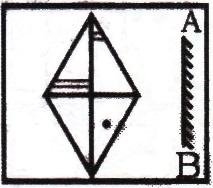
1485 05f85a0eaf001ae75723ca8e1
5f85a0eaf001ae75723ca8e1- 1false
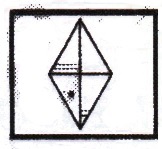
- 2true
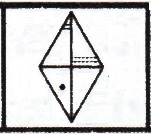
- 3false
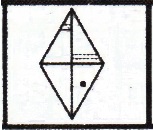
- 4false
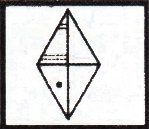
- Show AnswerHide Answer
- Workspace
- SingleChoice
Answer : 2. "
"
Q:Direction: Study the following information carefully and answer the questions given below:
Eleven persons buy things one after another. Only five persons buy things after P. Three persons buy things between P and Q. R buy things after S and before T. There are as many persons buy things before U as after V. More than three persons buy things between W and X who buy things just after P. Y buy things before Z and after R. No one buy things after T. Y buy things just after V. U buys after Q.
Which of the following statement is true?
1485 05fcdf051fd69872239080ee3
5fcdf051fd69872239080ee3Eleven persons buy things one after another. Only five persons buy things after P. Three persons buy things between P and Q. R buy things after S and before T. There are as many persons buy things before U as after V. More than three persons buy things between W and X who buy things just after P. Y buy things before Z and after R. No one buy things after T. Y buy things just after V. U buys after Q.
- 1R buy things before Ufalse
- 2More than two persons buy things before Sfalse
- 3No one buy things before Qfalse
- 4P buy things after Zfalse
- 5None is truetrue
- Show AnswerHide Answer
- Workspace
- SingleChoice
Answer : 5. "None is true"
Q: Three persons out of seven persons A, B, C, D, E, F and G are to form a committee under the following conditions.
i. Must choose A or C or both.
ii. If A and B are selected, then the other must be selected.
iii. C and D cannot be selected together.
If D is selected then which of the following can be selected -
1485 0619b7459c1c85f0fbf3aef17
619b7459c1c85f0fbf3aef17- 1E, Ffalse
- 2C, Efalse
- 3A, Gfalse
- 4A, Btrue
- Show AnswerHide Answer
- Workspace
- SingleChoice