


Reasoning Practice Question and Answer
8 Q:Direction : Study the following information carefully and answer the question given below:
Eight friends Manoj, Neeru, Ombir, Vipin, Willy, Xevier, Yacoub and Zampa attend symposiums on different months of the year viz. March, June, October and November, such that not more than two friends attend their symposiums in each of the months. Symposiums can be held on either 10th or 27th day of the month.
No two symposiums can be held on the same day. Willy and Neeru attend the symposiums on the same month. There are three symposiums held between the symposiums of Xevier and Ombir. Willy does not attend their symposium in November. Zampa attends his symposium immediately after Neeru. Vipin attends his symposium in the month of November. The number of friends who attend their symposiums between the symposiums of Yacoub and Zampa is the same as the number of friends who attend their symposiums between the symposiums of Neeru and Vipin. Xevier does not attend the symposium on October. Willy attends his symposium before Neeru.
How many friends attended symposium after Vipin?
1423 05e8d5c4b2412bb0c4fa15152
5e8d5c4b2412bb0c4fa15152Eight friends Manoj, Neeru, Ombir, Vipin, Willy, Xevier, Yacoub and Zampa attend symposiums on different months of the year viz. March, June, October and November, such that not more than two friends attend their symposiums in each of the months. Symposiums can be held on either 10th or 27th day of the month.
No two symposiums can be held on the same day. Willy and Neeru attend the symposiums on the same month. There are three symposiums held between the symposiums of Xevier and Ombir. Willy does not attend their symposium in November. Zampa attends his symposium immediately after Neeru. Vipin attends his symposium in the month of November. The number of friends who attend their symposiums between the symposiums of Yacoub and Zampa is the same as the number of friends who attend their symposiums between the symposiums of Neeru and Vipin. Xevier does not attend the symposium on October. Willy attends his symposium before Neeru.
- 15false
- 24false
- 37false
- 4No onetrue
- 5None of thesefalse
- Show AnswerHide Answer
- Workspace
- SingleChoice
Answer : 4. "No one "
Q:Direction: In these questions the symbols $ , @ , £ , • and # are used with different meanings as given below :
' X $ Y ' means X is neither greater than nor smaller than Y '
' X @ Y ' means X is neither greater than nor equal to Y '
' X £ Y ' means X is neither smaller than nor equal to Y '
' X• Y ' means X is not smaller than Y '
' X # Y ' means X is not greater than Y '
( A ) If only conclusion I is true
( B ) If only conclusion II is true
( C ) If either conclusion I or II is true
(D ) If neither conclusion I nor II is true
( E ) If both conclusion I and II are true
Statements: Z£N, N # K, K $ M, M@R
Conclusions:
I. M $ N
II. M£N 1422 05e992533a617427daa9b922e
5e992533a617427daa9b922e' X $ Y ' means X is neither greater than nor smaller than Y '
' X @ Y ' means X is neither greater than nor equal to Y '
' X £ Y ' means X is neither smaller than nor equal to Y '
' X• Y ' means X is not smaller than Y '
' X # Y ' means X is not greater than Y '
( A ) If only conclusion I is true
( B ) If only conclusion II is true
( C ) If either conclusion I or II is true
(D ) If neither conclusion I nor II is true
( E ) If both conclusion I and II are true
- 1Afalse
- 2Bfalse
- 3Ctrue
- 4Dfalse
- 5Efalse
- Show AnswerHide Answer
- Workspace
- SingleChoice
Answer : 3. "C"
Q:Directions: In each question of below are two / three statements followed by two conclusions numbered I and II . You have to take the two / three given statements. to be true even if they seem to be at variance from commonly known facts and then decide which of the given conclusions logically follows from the given statements disregarding commonly known facts.
Give answer
(1) If only conclusion I follows
(2) If only conclusion II follows
(3) If either conclusion I or conclusion II follows
(4) If neither conclusion I nor conclusion II follows
(5) If both conclusion I and conclusion II follow
Statements:
No fern is a plant.
All roots are ferns.
Conclusions
I. No plant is a root.
II. All ferns are roots.
1422 05dee134f9a104d77423a6478
5dee134f9a104d77423a6478Give answer
(1) If only conclusion I follows
(2) If only conclusion II follows
(3) If either conclusion I or conclusion II follows
(4) If neither conclusion I nor conclusion II follows
(5) If both conclusion I and conclusion II follow
No fern is a plant.
All roots are ferns.
Conclusions
I. No plant is a root.
II. All ferns are roots.
- 11true
- 22false
- 33false
- 44false
- 55false
- Show AnswerHide Answer
- Workspace
- SingleChoice
Answer : 1. "1"
Q:Direction: Each of the questions consists of a question and two statements numbered I and II given below it. You have to decide whether the data provide in the statements are sufficient to answer the question. Read both the statements and Give answer.
(A) If the data in statement I alone are sufficient to answer the question, while the data in statement II alone not sufficient to answer the question;
(B) If the data in statement II alone are sufficient to answer the question, while the data in statement I all are not sufficient to answer the question;
(C) If the data either in statement I alone or in statement II alone are sufficient to answer the question;
(D) If the data even in both statements I and II together are not sufficient to answer the question;
(E) If the data in both statements I and II together are necessary to answer the question.
Among four players M , N , O and P are playing card . Who is o ' s partner ?
I . P is sitting opposite to N .
II . Nis sitting right of M and left of O .
1422 05e8ea13e2787283f7f89b874
5e8ea13e2787283f7f89b874(A) If the data in statement I alone are sufficient to answer the question, while the data in statement II alone not sufficient to answer the question;
(B) If the data in statement II alone are sufficient to answer the question, while the data in statement I all are not sufficient to answer the question;
(C) If the data either in statement I alone or in statement II alone are sufficient to answer the question;
(D) If the data even in both statements I and II together are not sufficient to answer the question;
(E) If the data in both statements I and II together are necessary to answer the question.
I . P is sitting opposite to N .
II . Nis sitting right of M and left of O .
- 1Afalse
- 2Bfalse
- 3Ctrue
- 4Dfalse
- 5Efalse
- Show AnswerHide Answer
- Workspace
- SingleChoice
Answer : 3. "C"
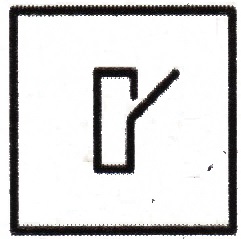
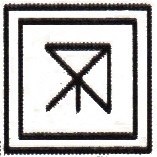
Q: Question Figure
1421 05f7af23c29d939344cff5a6d
5f7af23c29d939344cff5a6d- 1false

- 2false

- 3false
- 4true

- Show AnswerHide Answer
- Workspace
- SingleChoice
Answer : 4. "
"
Q: Two statements are given followed by two conclusions numbered I and II. Assuming the statements to be true, even if they seem to be at variance with commonly known facts, decide which of the conclusions logically follow(s) from the statements.
Statements:
Some potatoes are onions.
Some onions are tomatoes.
Conclusions:
I. Some tomatoes are potatoes.
II. No tomato is a potato.
1421 0644924af9b03af93b70d4b85
644924af9b03af93b70d4b85Some potatoes are onions.
Some onions are tomatoes.
I. Some tomatoes are potatoes.
II. No tomato is a potato.
- 1Only conclusion II followsfalse
- 2Only conclusion I followsfalse
- 3Either conclusion I or II followstrue
- 4Both conclusions I and II followfalse
- Show AnswerHide Answer
- Workspace
- SingleChoice
Answer : 3. "Either conclusion I or II follows "
Q: Pointing to a men, women said that he is the son of my mother's brother's father's son. Then find out how is that man related to that woman?
1421 0603777edcd43d04a8f4b99ce
603777edcd43d04a8f4b99ce- 1Motherfalse
- 2Cousintrue
- 3Brotherfalse
- 4None of thesefalse
- Show AnswerHide Answer
- Workspace
- SingleChoice
Answer : 2. "Cousin "
Q: Select the set in which the numbers are related in the same way as are the numbers of the following sets. (NOTE: Operations should be performed on the whole numbers, without breaking down the numbers into its constituent digits. E.g. 13 – Operations on 13 such as adding/subtracting / multiplying etc. to 13 can be performed. Breaking down 13 into 1 and 3 and then performing mathematical operations on 1 and 3 is not allowed)
(40, 120, 400)
(18, 20, 78)
1421 06479acb188eeb5476928db96
6479acb188eeb5476928db96(40, 120, 400)
(18, 20, 78)
- 1(29, 23, 98)true
- 2(56, 14, 108)false
- 3(25, 27, 92)false
- 411, 720, 660)false
- Show AnswerHide Answer
- Workspace
- SingleChoice