


Reasoning Practice Question and Answer
8 Q: Which of the following n umbers will replace the question mark (?) in the given series?
78, 112, 64, ?, 50, 140
1158 064491445883b2968440e7ec4
64491445883b2968440e7ec478, 112, 64, ?, 50, 140
- 1134false
- 2126true
- 3108false
- 4116false
- Show AnswerHide Answer
- Workspace
- SingleChoice
Answer : 2. "126 "
Q: Select the Venn diagram that best represents the relationship between the following classes.
Bed, Bedroom, House
1157 0644a7826883b296844124e4d
644a7826883b296844124e4dBed, Bedroom, House
- 1false
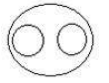
- 2false
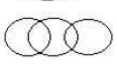
- 3true
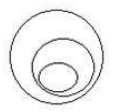
- 4false

- Show AnswerHide Answer
- Workspace
- SingleChoice
Answer : 3. "
"
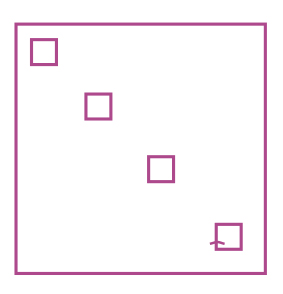
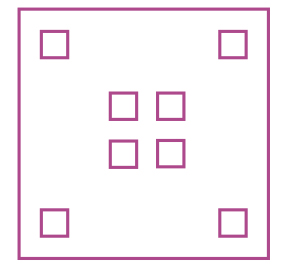
Q: Direction: In the question figures below, a piece of paper is folded and cut as shown below. Find out from the answer figures how it will appear when opened.
Question figure
1157 05fd21ba24ae2934b44f76ce8
5fd21ba24ae2934b44f76ce8Question figure
- 1false

- 2false

- 3false
- 4true
- Show AnswerHide Answer
- Workspace
- SingleChoice
Answer : 4. "
"
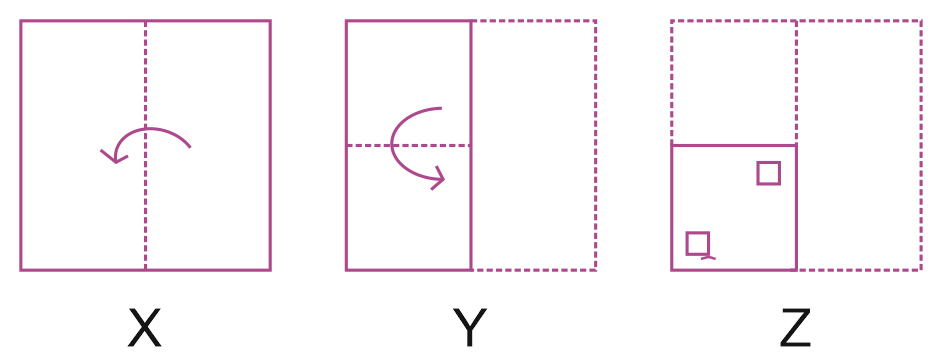
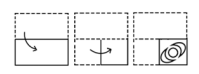
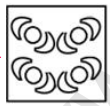
Q: The sequence of folding a piece of paper and the manner in which the folded paper is cut is shown in the in the following figures. How would this paper look when unfolded?
1157 064210c23dcb650c1455fbe9f
64210c23dcb650c1455fbe9f- 1false

- 2false

- 3false
- 4true

- Show AnswerHide Answer
- Workspace
- SingleChoice
Answer : 4. "
"
Q:Directions: Study the following information to answer the questions.
Twelve people are sitting in two parallel rows containing 6 people each, in such a way that there is an equal distance between adjacent persons. In row-1 P, Q, R, S, T, and U are seated and all of them are facing south. In row-2 A, B, C, D, E and F are seated and all facing North. Therefore, in the given seating arrangement each member seated in a row faces another member of the outer row.
S sits third to right of Q, either S or Q sits an extreme end of line. The one who faces Q sits second to right of E. Two people sits between B and F. Neither B nor F sits at an extreme end of the line. The immediate end of line.
The immediate neighbour of B faces the person who sits third to left of P, R and T are immediate neighbours of the each other. C sits second to the left of A. T does not face the immediate neighbour of D.
Who amongst the following sits at the extreme ends of the rows?
1157 05fdb3af2055cee7a9b5f949a
5fdb3af2055cee7a9b5f949aS sits third to right of Q, either S or Q sits an extreme end of line. The one who faces Q sits second to right of E. Two people sits between B and F. Neither B nor F sits at an extreme end of the line. The immediate end of line.
The immediate neighbour of B faces the person who sits third to left of P, R and T are immediate neighbours of the each other. C sits second to the left of A. T does not face the immediate neighbour of D.
- 1S, Dfalse
- 2Q, Afalse
- 3U, Ffalse
- 4Q, Efalse
- 5P, Dtrue
- Show AnswerHide Answer
- Workspace
- SingleChoice
Answer : 5. "P, D"
Q: If L × M means that L is the mother of M, L – M means that L is the father of M, L ÷ M means that L is the sister of M, then which of the following expression shows that P is the father of R?
1157 0648b1118b90df94e0352e4bf
648b1118b90df94e0352e4bf- 1Q – P × Rfalse
- 2P – Q ÷ Rtrue
- 3P – Q × Rfalse
- 4R – P × Qfalse
- Show AnswerHide Answer
- Workspace
- SingleChoice
Answer : 2. "P – Q ÷ R"
Q:Instructions Directions: Study the information and answer the following questions.
In a certain code language 'economics is not money' is written as 'ka la ho ga', 'demand and supply economics' is written as 'mo ta pa ka', 'money makes only part' is written as 'zi la ne ki' and 'demand makes supply economics' is written as 'zi mo ka ta'.
What is the code for 'supply' in the given code language?
1157 05e746dd5ab844a18ffed8502
5e746dd5ab844a18ffed8502In a certain code language 'economics is not money' is written as 'ka la ho ga', 'demand and supply economics' is written as 'mo ta pa ka', 'money makes only part' is written as 'zi la ne ki' and 'demand makes supply economics' is written as 'zi mo ka ta'.
- 1Only tafalse
- 2Only mofalse
- 3Either pa or mofalse
- 4Only pafalse
- 5Either mo or tatrue
- Show AnswerHide Answer
- Workspace
- SingleChoice
Answer : 5. "Either mo or ta "
Q: Two statements are given, followed by two conclusions numbered I and II. Assuming the statements to be true, even if they seem to be at variance with commonly known facts, decide which of the conclusions logically follow(s) from the statements.
Statements:
Some chairs are windows.
All windows are boards.
Conclusions:
I. All chairs are boards.
II. All boards are windows.
1157 1644bc4086842c5ce47ce68eb
644bc4086842c5ce47ce68ebSome chairs are windows.
All windows are boards.
I. All chairs are boards.
II. All boards are windows.
- 1Neither conclusion I nor II follows.true
- 2Both conclusions I and II follow.false
- 3Only conclusion I follows.false
- 4Only conclusion II follows.false
- Show AnswerHide Answer
- Workspace
- SingleChoice