


Reasoning Practice Question and Answer
8 Q:Study the following information carefully and answer the questions given below:
Twelve people are sitting in two parallel rows containing six people each, in such a way that there is an equal distance between adjacent persons. In row-1 K, J, I, H, G and V are seated and all of them are facing South. In row-2 Z, Y, X, W, E and U are seated and all of them are facing North. Therefore, in the given seating arrangement each member seated in a row faces another member of the other row.
K sits third to the right of G. Z sits second to the right of E. Neither Z nor E faces G or K. Z does not sits at any of the extreme end. I does not faces Z or E and I does not sits at any of the extreme end. Only one person sits between U and X. Neither U nor X faces G. X does not sits at any of the extreme end. Only one person sit between V and J. U is not an immediate neighbour of Y. Z does not faces V. W sit extreme left end of the row.
U is related to V in the same way as J is related to X. In the same pattern which of the following is related to K?
1415 060a25ae4b1d2440614ba049d
60a25ae4b1d2440614ba049dTwelve people are sitting in two parallel rows containing six people each, in such a way that there is an equal distance between adjacent persons. In row-1 K, J, I, H, G and V are seated and all of them are facing South. In row-2 Z, Y, X, W, E and U are seated and all of them are facing North. Therefore, in the given seating arrangement each member seated in a row faces another member of the other row.
K sits third to the right of G. Z sits second to the right of E. Neither Z nor E faces G or K. Z does not sits at any of the extreme end. I does not faces Z or E and I does not sits at any of the extreme end. Only one person sits between U and X. Neither U nor X faces G. X does not sits at any of the extreme end. Only one person sit between V and J. U is not an immediate neighbour of Y. Z does not faces V. W sit extreme left end of the row.
- 1Wfalse
- 2Efalse
- 3Ufalse
- 4Ztrue
- 5None of thesefalse
- Show AnswerHide Answer
- Workspace
- SingleChoice
Answer : 4. " Z "
Q: Complete the series choosing the missing letter
ab__b__aa__b__ba
1415 0618b876b83fd225f3b2f21cd
618b876b83fd225f3b2f21cd- 1b, a, a, afalse
- 2a, b, a, afalse
- 3b, b, b, btrue
- 4a, a, a, afalse
- Show AnswerHide Answer
- Workspace
- SingleChoice
Answer : 3. "b, b, b, b"
Q: Select the number from among the given options that can replace the question mark (?) in the following series.
728, 717, 695, 662, 618, ?
1414 06426cee9dcb650c1456f5e3e
6426cee9dcb650c1456f5e3e728, 717, 695, 662, 618, ?
- 1564false
- 2561false
- 3563true
- 4562false
- Show AnswerHide Answer
- Workspace
- SingleChoice
Answer : 3. "563 "
Q: Which of the following interchanges of numbers and mathematical signs would make the given equation correct?
729 × 81 ÷ 20 + 16 − 6 = 50
1414 06479c210bf323e479a7fd7fc
6479c210bf323e479a7fd7fc729 × 81 ÷ 20 + 16 − 6 = 50
- 16 and 20, × and ÷true
- 220 and 50, + and −false
- 316 and 50, × and +false
- 416 and 20, + and ÷false
- Show AnswerHide Answer
- Workspace
- SingleChoice
Answer : 1. "6 and 20, × and ÷"
Q: Question Figure

1414 05f75c70b53f6013e85b7f401
5f75c70b53f6013e85b7f401- 1false

- 2false

- 3false

- 4true
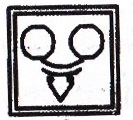
- Show AnswerHide Answer
- Workspace
- SingleChoice
Answer : 4. "
"
Q:Direction: Study the information given below carefully and answer the questions that follow.
There are two persons Basu and Vinay, who walked from different point to reach a common point A.
Basu started walking from point C in north direction. After walking 3m he turns right from point E, he then walks for another 3m and turns right from point D. He then walks for 7m and then turns left from point G and walks for 5m till point F. He then turns left and walks for 3m and then turns right from point N and walks for 6m till point A.
Vinay started walking from point X in north direction. After walking 9m he turns left from point Z and walks for 6m and then turns left from point Y. He then walks for 4m and then turns left from point P and walks for 9m till point Q. He then turns right and walks for 2m till point A.
Four are the same in a certain way thus forms a group.
In which direction is point X with respect to point G?
1413 064e882272e7e7af712bf2182
64e882272e7e7af712bf2182There are two persons Basu and Vinay, who walked from different point to reach a common point A.
Basu started walking from point C in north direction. After walking 3m he turns right from point E, he then walks for another 3m and turns right from point D. He then walks for 7m and then turns left from point G and walks for 5m till point F. He then turns left and walks for 3m and then turns right from point N and walks for 6m till point A.
Vinay started walking from point X in north direction. After walking 9m he turns left from point Z and walks for 6m and then turns left from point Y. He then walks for 4m and then turns left from point P and walks for 9m till point Q. He then turns right and walks for 2m till point A.
Four are the same in a certain way thus forms a group.
- 1North-Eastfalse
- 2Southfalse
- 3Easttrue
- 4South-Westfalse
- 5Northfalse
- Show AnswerHide Answer
- Workspace
- SingleChoice
Answer : 3. "East"
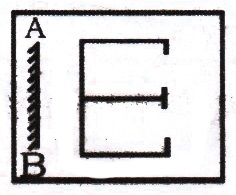
Q: Question Figure
1413 05f8573aaf001ae75723b518c
5f8573aaf001ae75723b518c- 1false

- 2false

- 3false

- 4true

- Show AnswerHide Answer
- Workspace
- SingleChoice
Answer : 4. "
"
Q: Directions: A statement is given followed by two inferences I and II. You have to consider the statement to be true even if it seems to be at variance with commonly known facts. You have to decide which of the given inferences, if any, follow from the given statement.
Statement I: Classical Indian logicians (Naiyāyikas) define Upamāna (Comparison) as the cognition of the new object through similarity, known by another means of cognition.
Statement II: Naiyāyikas consider upamāna as a type of inductive reasoning and therefore view it as a type of inference (anumāna) only.
1413 064b67f36e2108a72392c1484
64b67f36e2108a72392c1484- 1Statement I is correct but Statement II is incorrectfalse
- 2Statement I is incorrect but Statement II is correcttrue
- 3Both Statement I and Statement II are correctfalse
- 4Both Statement I and Statement II are incorrectfalse
- Show AnswerHide Answer
- Workspace
- SingleChoice