


Reasoning Practice Question and Answer
8 Q: Question figure
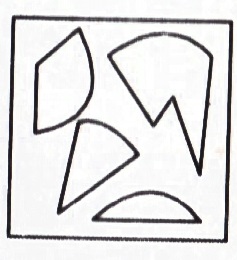
1366 05f75b11dc995cb2bd5919f9a
5f75b11dc995cb2bd5919f9a- 1false

- 2false

- 3true
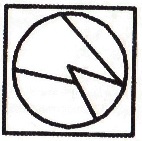
- 4false

- Show AnswerHide Answer
- Workspace
- SingleChoice
Answer : 3. "
"
Q: Three different positions of the same dice are shown (figures 1 to 3). find the number on the face opposite to the face having '1'.

1366 0648826b7f4063d472f442dd0
648826b7f4063d472f442dd0- 13false
- 26false
- 35false
- 44true
- Show AnswerHide Answer
- Workspace
- SingleChoice
Answer : 4. "4"
Q: Find the number of triangles in the given figure.

1365 05fe49b1c98f79f7f7fc856c7
5fe49b1c98f79f7f7fc856c7- 18false
- 210true
- 315false
- 420false
- Show AnswerHide Answer
- Workspace
- SingleChoice
Answer : 2. "10"
Q: Which of the following numbers will replace the question mark (?) in the given series?
1331, 2197, ?, 6859
1365 064785293d0c6d8fd0852fdda
64785293d0c6d8fd0852fdda1331, 2197, ?, 6859
- 14913true
- 25832false
- 34096false
- 43375false
- Show AnswerHide Answer
- Workspace
- SingleChoice
Answer : 1. "4913"
Q:Out of the following five figures, four are alike in some manner and differs from these in the manner. select the odd figure.
Question figure.

1364 064ac35f4f9f3b5825903890d
64ac35f4f9f3b5825903890d- 1true

- 2false

- 3false

- 4false

- Show AnswerHide Answer
- Workspace
- SingleChoice
Answer : 1. "
"
Q:Directions: In the following questions, the symbols @, #, $, % and & are used with the following meaning as illustrated below-
‘P@Q’ means ‘P is neither smaller than nor equal to Q ’
‘P#Q’ means ‘P is neither greater than nor equal to Q'
‘P$Q’ means ‘P is neither smaller than nor greater than Q’
‘P%Q’ means ‘P is not greater than Q’
‘P&Q’ means ‘P is not smaller than Q’
Now in each of the following questions assuming the given statements to be true, find which of the three conclusions
I, II and III given below them is/are definitely true and give your answer accordingly.
Statement: J#K&L, L@M$O, O@N%G
Conclusions:
I. G&M
II. K@O
III. M@G
1364 05fcdf5064c9207085cf23199
5fcdf5064c9207085cf23199‘P@Q’ means ‘P is neither smaller than nor equal to Q ’
‘P#Q’ means ‘P is neither greater than nor equal to Q'
‘P$Q’ means ‘P is neither smaller than nor greater than Q’
‘P%Q’ means ‘P is not greater than Q’
‘P&Q’ means ‘P is not smaller than Q’
Now in each of the following questions assuming the given statements to be true, find which of the three conclusions
I, II and III given below them is/are definitely true and give your answer accordingly.
Conclusions:
I. G&M
II. K@O
III. M@G
- 1Either I or IIIfalse
- 2II and Either I or IIItrue
- 3Only Ifalse
- 4I and Either II or IIIfalse
- 5Both I and IIfalse
- Show AnswerHide Answer
- Workspace
- SingleChoice
Answer : 2. "II and Either I or III"
Q: In the following question, select the odd word / letter / number from the given alternatives.
1364 0601d0d0c66813962b22bc2fb
601d0d0c66813962b22bc2fb- 1budfalse
- 2branchfalse
- 3leaffalse
- 4planttrue
- Show AnswerHide Answer
- Workspace
- SingleChoice
Answer : 4. "plant"
Q:Direction : In each of the questions below are given some statements followed by two conclusions. You have to take the given statements to be true even if they seem to be at variance with commonly known facts. Read all the conclusions and then decide which of the given conclusions logically follows from the given statements disregarding commonly known facts.
(a) If only conclusion I follows.
(b) If only conclusion II follows.
(c) If either conclusion I or II follows.
(d) If neither conclusion I nor II follows.
(e) If both conclusions I and II follow.
Statements: Z<X<C≤V;
B>C<G<H≤J
Conclusion:
I: Z<G
II: X<J
1364 0603de9c6cd43d04a8f5cf403
603de9c6cd43d04a8f5cf403(a) If only conclusion I follows.
(b) If only conclusion II follows.
(c) If either conclusion I or II follows.
(d) If neither conclusion I nor II follows.
(e) If both conclusions I and II follow.
B>C<G<H≤J
Conclusion:
I: Z<G
II: X<J
- 1(A)false
- 2(B)false
- 3(C)false
- 4(D)false
- 5(E)true
- Show AnswerHide Answer
- Workspace
- SingleChoice