


Reasoning Practice Question and Answer
8 Q:Which one set of letters when sequentially placed at the gaps in the given letter series shall complete it.
a_c_abb_a_bc_bc_ab
4534 05ee0c74e8c4c964f73d9912a
5ee0c74e8c4c964f73d9912a- 1cbcaaafalse
- 2bcccabfalse
- 3bccaactrue
- 4acbabcfalse
- Show AnswerHide Answer
- Workspace
- SingleChoice
Answer : 3. "bccaac "
Q: Choose the correct option from the following options.
9 : 101 ∷ 10 :?
4514 05ece12bf87aeb56649573436
5ece12bf87aeb566495734369 : 101 ∷ 10 :?
- 1100false
- 2122true
- 3121false
- 4120false
- Show AnswerHide Answer
- Workspace
- SingleChoice
Answer : 2. "122"
Q: Find out which of the figures (1), (2), (3) and (4) can be formed from the pieces given in figure (X).
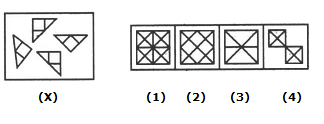
4511 0607feb490372d8542897836d
607feb490372d8542897836d- 11false
- 22true
- 33false
- 44false
- Show AnswerHide Answer
- Workspace
- SingleChoice
Answer : 2. "2"
Q: A is the son of B, C. B's sister has a son D and a daughter E. F is the maternal uncle of D. How many nephews does F have? 4510 15c2df44ef11ee42b6468912f
5c2df44ef11ee42b6468912f- 11false
- 22true
- 33false
- 40false
- Show AnswerHide Answer
- Workspace
- SingleChoice
Answer : 2. "2"
Q: A series is given, with one term missing choose the correct alternative from the given ones that will complete the series.
1, 9, 25, 81, 329, ?
4498 05ed4ae315ccf7008ed892156
5ed4ae315ccf7008ed8921561, 9, 25, 81, 329, ?
- 11651true
- 21650false
- 31649false
- 4991false
- Show AnswerHide Answer
- Workspace
- SingleChoice
Answer : 1. "1651 "
Q: In each of the following questions. Select the related letter/ word/ number from the given alternatives.
WRITE : XSJUF : : OPEAC : ?
4496 15e96f2abfc7e7a3060b6bc09
5e96f2abfc7e7a3060b6bc09- 1PQFDBfalse
- 2POFBDfalse
- 3PQFRDfalse
- 4PQFBDtrue
- Show AnswerHide Answer
- Workspace
- SingleChoice
Answer : 4. "PQFBD "
Q: In a certain code language, " ARRAY " is written as "19917". How is " LEARNING " written in that code language?
4491 060af75daf0fca47be6c3e333
60af75daf0fca47be6c3e333- 135194977false
- 23519467false
- 335195957true
- 435194957false
- Show AnswerHide Answer
- Workspace
- SingleChoice
Answer : 3. "35195957 "
Q: Anand is son of Prema . Rajeev is brother of Prema . Neha is daughter of Rashmi . Neha is sister of Rajeev . How is Anand related to Rashmi ?
4475 15dbfc0b5d701145da0b07a46
5dbfc0b5d701145da0b07a46- 1Sonfalse
- 2Grand Sontrue
- 3Grand fatherfalse
- 4Grand daughterfalse
- Show AnswerHide Answer
- Workspace
- SingleChoice