


Reasoning Practice Question and Answer
8 Q:Directions: Study the lowing information to answer the given questions
S, T, U, V, W, X, Y and Z are sitting in a straight line equidistant from each other (but not necessarily in the same order). Some of them are facing south while some are facing north.
(Note: Facing the same direction means, if one is facing north then the other also faces north and vice-versa. Facing the opposite directions means, if one is facing north then the other faces south and vice-versa)
S faces north. Only two people sit to the right of S. T sits third to the left of S. Only one person sits between T and X. X sits to the immediate right of W. Only one person sits between W and Z. Both the immediate neighbors of T face the same direction. U sits third to the left of X. T faces the opposite direction as S. Y does not sit at any of the extremes ends of the line. V faces the same direction as W. Both Y and U face the opposite direction of Z.
What is the position of X with respect to Z?
919 064f0a8cd2bbb242750db47b8
64f0a8cd2bbb242750db47b8- 1Second to the leftfalse
- 2Third to the righttrue
- 3Third to the leftfalse
- 4Fifth to the rightfalse
- 5Second to the rightfalse
- Show AnswerHide Answer
- Workspace
- SingleChoice
Answer : 2. "Third to the right"
Q:Direction: Read the following information carefully and answer the given questions:
There are nine people A, B, C, D, E, F, G, H and I who all live in different cities such as Mumbai, Kolkata, and Jaipur but not necessarily in the same order. Not more than three people live in the same city and at least two people live in the same city. A neither live in Mumbai nor in Kolkata. D and G are friends but live in different cities but none of them lives in Jaipur. Either H or F lives in Kolkata. B and G live in the same city but it's not Mumbai. I, E and D are friends and the two of them live in the same city. E and H live in the same city but not Mumbai.
Which of the following is true?
919 064ddf0d8ad4e6a1a0b66bd05
64ddf0d8ad4e6a1a0b66bd05- 1A lives in Jaipur.false
- 2B lives in Mumbai.true
- 3C lives in Kolkatafalse
- 4I lives in Kolkatafalse
- 5D lives in Jaipurfalse
- Show AnswerHide Answer
- Workspace
- SingleChoice
Answer : 2. "B lives in Mumbai."
Q:Directions : In which answer figure is the question figure embedded?
Question figure. 92

918 0643944f906979810ace0c0b7
643944f906979810ace0c0b7- 1true
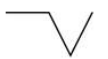
- 2false
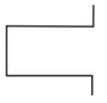
- 3false

- 4false

- Show AnswerHide Answer
- Workspace
- SingleChoice
Answer : 1. "
"
Q: If A denotes ‘+’, B denotes ‘×’, C denotes ‘−’ and D denotes ‘÷’, then what will come in place of ‘?’ in the following equation?
(13 B 9) D 3 A (14 D 7) B 6 C 21 A (32 B 2) = ?
918 06447c325e2eff5686889c23d
6447c325e2eff5686889c23d(13 B 9) D 3 A (14 D 7) B 6 C 21 A (32 B 2) = ?
- 196false
- 2100false
- 3112false
- 494true
- Show AnswerHide Answer
- Workspace
- SingleChoice
Answer : 4. "94"
Q: Select the option that is related to the third term in the same way as the second term is related to the first term and the sixth term is related to the fifth term.
25 :4 :: 64 : ? :: 225 :14
918 0644fa7ba39143d085f334b05
644fa7ba39143d085f334b0525 :4 :: 64 : ? :: 225 :14
- 18false
- 210false
- 37true
- 49false
- Show AnswerHide Answer
- Workspace
- SingleChoice
Answer : 3. "7"
Q: In a certain code language, 'STAR’ is coded as '92678' and 'FLAG' is coded as '20261521'. How will 'LOGO' be coded in that language?
918 064be6c262d3130f5754ed2c5
64be6c262d3130f5754ed2c5- 112201215true
- 212221214false
- 315122012false
- 412201325false
- Show AnswerHide Answer
- Workspace
- SingleChoice
Answer : 1. "12201215"
Q: The second number in the given number pairs is obtained by performing certain mathematical operation(s) on the first number. The same operation(s) are followed in all the number pairs, except one. Find that odd number pair.
918 064661bed45f1450a80d47308
64661bed45f1450a80d47308- 16 : 36true
- 22 : 15false
- 33 : 20false
- 45 : 30false
- Show AnswerHide Answer
- Workspace
- SingleChoice
Answer : 1. "6 : 36"
Q: A # B means ‘A is the sister of B’.
A @ B means ‘A is the son of B’.
A & B means ‘A is the father of B’.
A % B means ‘A is the mother of B’.
If W @ Q % T & Y @ M % K, then how is Q related to K?
918 06486e193bf323e479aa6b048
6486e193bf323e479aa6b048A @ B means ‘A is the son of B’.
A & B means ‘A is the father of B’.
A % B means ‘A is the mother of B’.
If W @ Q % T & Y @ M % K, then how is Q related to K?
- 1Daughterfalse
- 2Father’s mothertrue
- 3Motherfalse
- 4Mother’s motherfalse
- Show AnswerHide Answer
- Workspace
- SingleChoice