

Practice Question and Answer
8 Q: Harisena, the author of the famous “Prayag Prashasti” adorned the court of which Gupta ruler?
3288 05f0d9adefce67160728f2f7c
5f0d9adefce67160728f2f7c- 1Samudraguptatrue
- 2Kumar Gupta-Ifalse
- 3Chandragupta Vikramadityafalse
- 4Skandaguptafalse
- Show AnswerHide Answer
- Workspace
- SingleChoice
Answer : 1. "Samudragupta "
Explanation :
Harisena, the author of the famous "Prayag Prashasti," adorned the court of Samudragupta, who was a prominent ruler of the Gupta Empire in ancient India. Samudragupta ruled from around 335 to 375 CE and is often considered one of the greatest rulers of the Gupta dynasty. The "Prayag Prashasti" is an inscription that glorifies Samudragupta's achievements and military conquests, providing valuable historical insights into the Gupta period.
Q: Who founded the city of Pataliputra?
1898 05f0d98236d435560094861f7
5f0d98236d435560094861f7- 1Ajatshatrufalse
- 2Bimbisarafalse
- 3Ashokafalse
- 4Udayintrue
- Show AnswerHide Answer
- Workspace
- SingleChoice
Answer : 4. "Udayin "
Explanation :
Udayin founded the city of Pataliputra in the 5th century. Pataliputra is now known as Patna which is the capital of Bihar. Udayin was the ruler who first established Pataliputra as the capital of Magadha.
Q: Who directed India's first publicly screened cinema Raja Harishchandra?
2610 05f04424ed996064ceba932c5
5f04424ed996064ceba932c5- 1Bimal Royfalse
- 2Dada Saheb Phalketrue
- 3V G Damlefalse
- 4V Shantaramfalse
- Show AnswerHide Answer
- Workspace
- SingleChoice
Answer : 2. "Dada Saheb Phalke "
Explanation :
India's first publicly screened cinema, "Raja Harishchandra," was directed by Dadasaheb Phalke. He is often regarded as the father of Indian cinema. "Raja Harishchandra" was released in 1913, marking the beginning of the Indian film industry. Dadasaheb Phalke played a crucial role in the early development of Indian cinema and is remembered for his pioneering contributions to the art form.
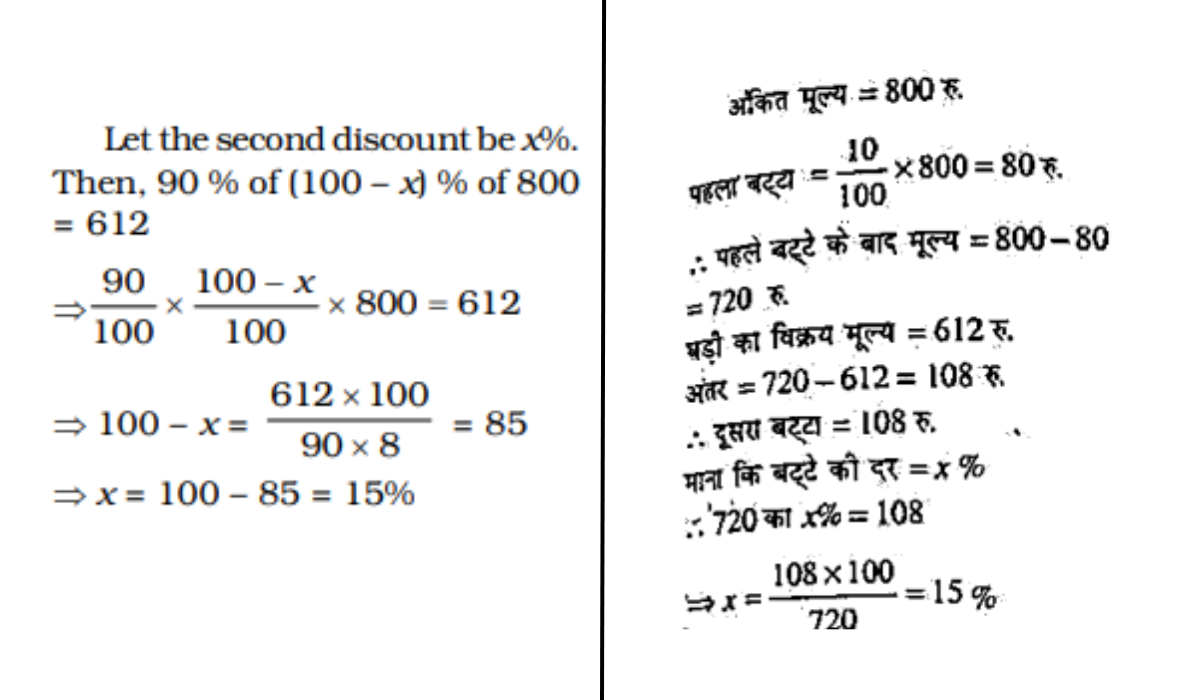
Q: The marked price of a watch is 800. A shopkeeper gives two successive discounts and sells the watch at 612. If the first discount is 10%, the second discount is:
1153 0624d54686dc29f5ccd0e76a8
624d54686dc29f5ccd0e76a8- 115%true
- 220%false
- 310%false
- 412%false
- Show AnswerHide Answer
- Workspace
- SingleChoice
Answer : 1. "15% "
Explanation :
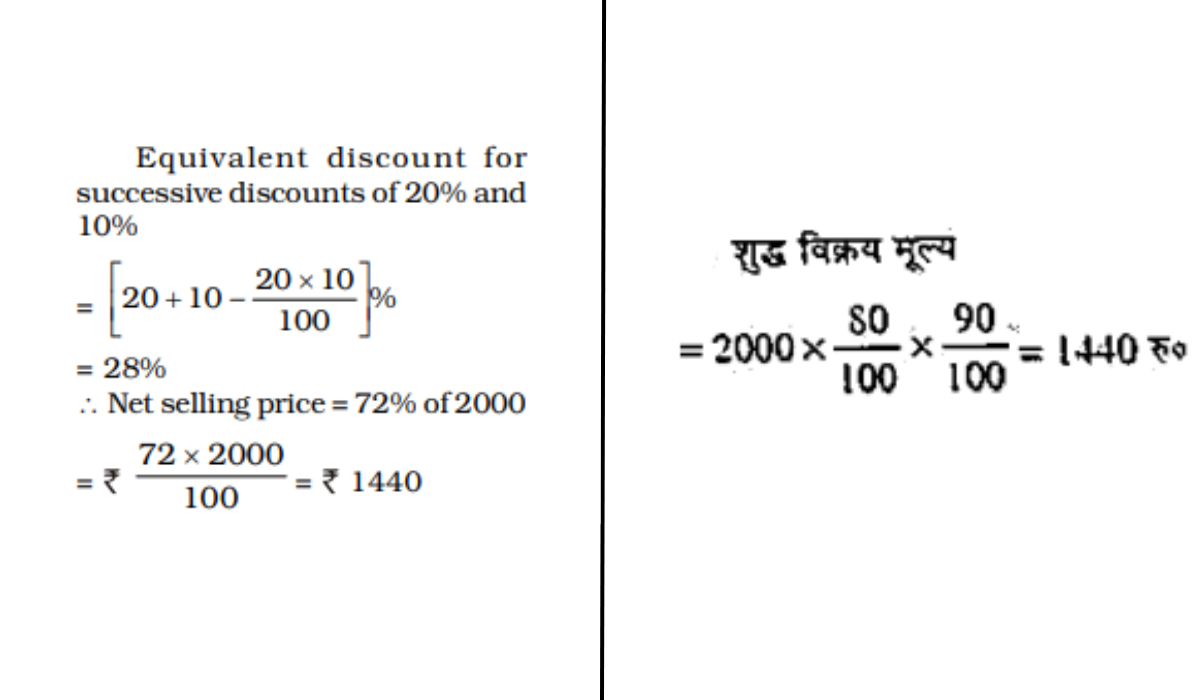
Q: List price of an article at a show room is ₹ 2,000 and it is being sold at successive discounts of 20% and 10%. Its net selling price will be:
1196 0624d53cae6c50b4b29d6ea33
624d53cae6c50b4b29d6ea33- 1₹ 1440true
- 2₹ 1400false
- 3₹ 1900false
- 4₹ 1700false
- Show AnswerHide Answer
- Workspace
- SingleChoice
Answer : 1. "₹ 1440 "
Explanation :
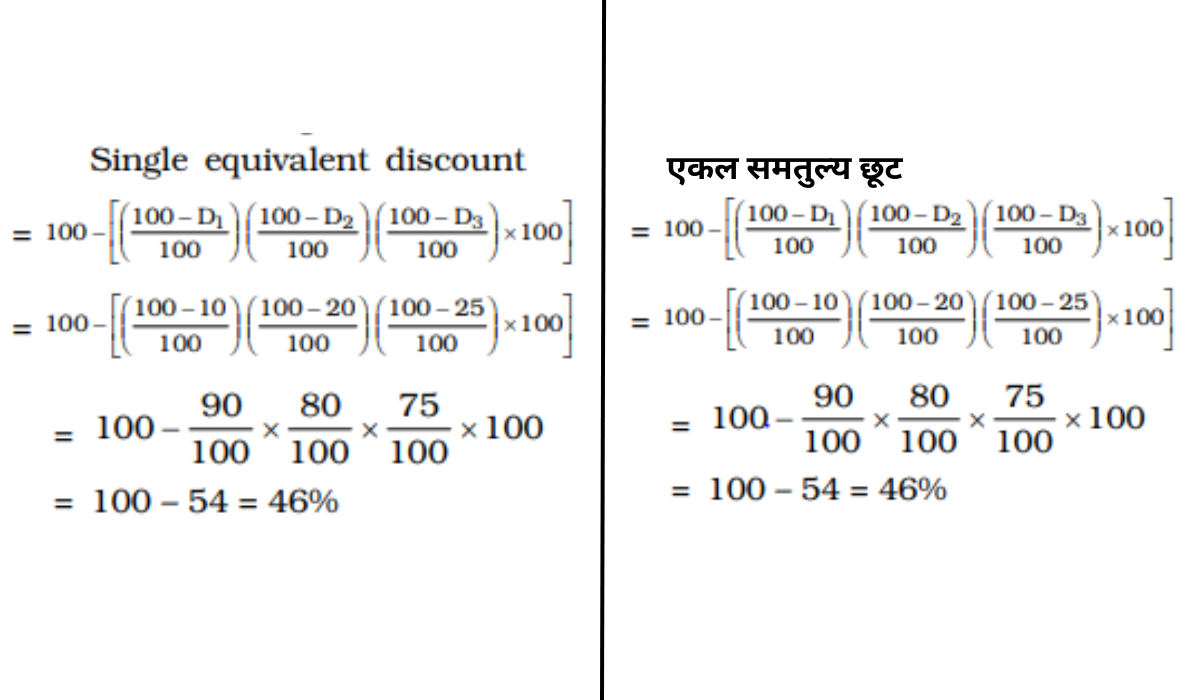
Q: A single discount equivalent to the successive discounts of 10%, 20% and 25% is
1263 0624d536abadeb679cf087705
624d536abadeb679cf087705- 146%true
- 260%false
- 355%false
- 445%false
- Show AnswerHide Answer
- Workspace
- SingleChoice
Answer : 1. "46% "
Explanation :
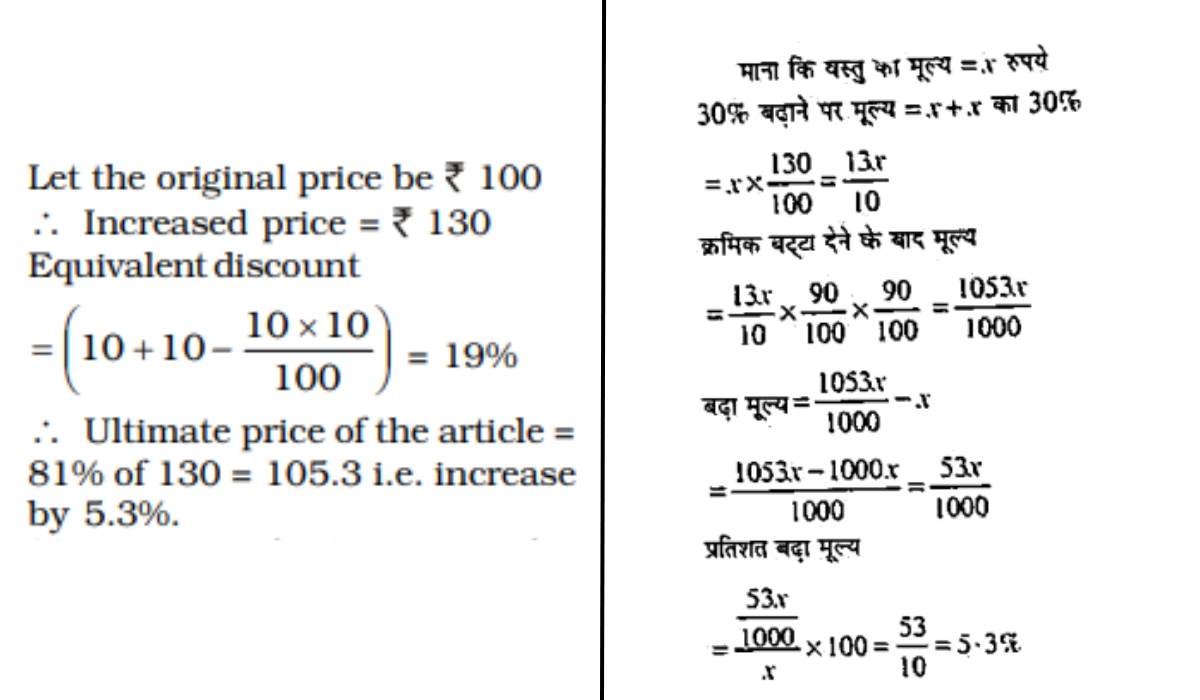
Q: The price of an article is raised by 30% and then two successive discounts of 10% each are allowed. Ultimately the price of the article is
1029 0624d53016dc29f5ccd0e7252
624d53016dc29f5ccd0e7252- 1decreased by 3%false
- 2decreased by 5.3%false
- 3increased by 10%false
- 4increased by 5.3%true
- Show AnswerHide Answer
- Workspace
- SingleChoice
Answer : 4. "increased by 5.3% "
Explanation :
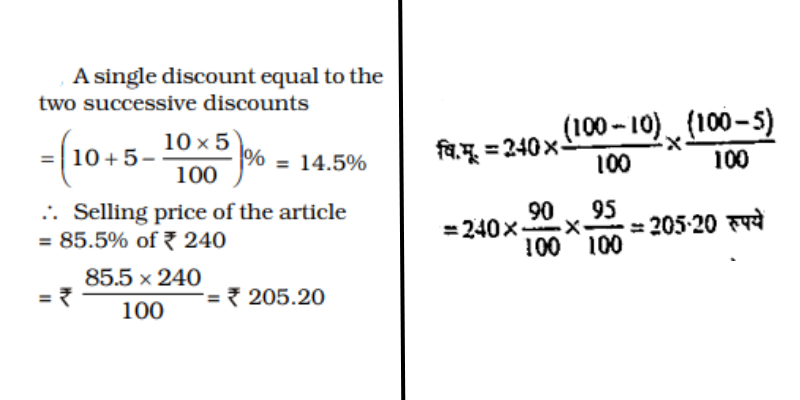
Q: An item is marked for ₹ 240 for sale. If two successive discounts of 10% and 5% are allowed on the sale price, the selling price of the article will be
1169 0624d526967b2505d7e56ed67
624d526967b2505d7e56ed67- 1₹ 34.80false
- 2₹ 36false
- 3₹ 205.20true
- 4₹ 204false
- Show AnswerHide Answer
- Workspace
- SingleChoice
Answer : 3. "₹ 205.20 "
Explanation :