


Practice Question and Answer
8 Q: Microsoft power point is a software designed to create
1467 060b88cb2dbb4032e1900110e
60b88cb2dbb4032e1900110e- 1Internetfalse
- 2Data basesfalse
- 3Text documentsfalse
- 4Multimedia presentationtrue
- Show AnswerHide Answer
- Workspace
- SingleChoice
Answer : 4. "Multimedia presentation"
Q: Who has been partnered with the Suryoday SFB to launch the FD service?
1467 0600eb06559b22a1f1cde6fc2
600eb06559b22a1f1cde6fc2- 1PPBLtrue
- 2HDFC Bankfalse
- 3PPBfalse
- 4PNBfalse
- Show AnswerHide Answer
- Workspace
- SingleChoice
Answer : 1. "PPBL"
Q:Directions: Study the following table carefully to answer the questions that follow .
Number of soldiers ( in thousands ) joining five different forces during six different.
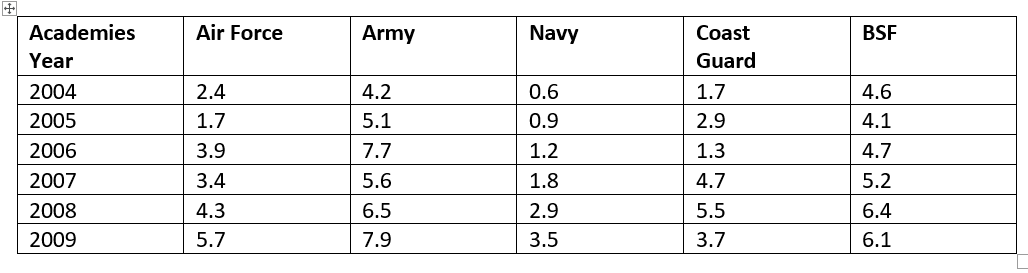
What was the average number of soldiers joining all the forces together in the year 2007?
1467 05e82ebabd06376635697510a
5e82ebabd06376635697510aNumber of soldiers ( in thousands ) joining five different forces during six different.
- 14,620false
- 242,400false
- 34,260false
- 442,600false
- 5None of thesetrue
- Show AnswerHide Answer
- Workspace
- SingleChoice
Answer : 5. "None of these "
Q: Crescent shaped sand dunes are known as -
1467 06311f9887c72c077846eb9da
6311f9887c72c077846eb9da- 1Seiffalse
- 2Barkhantrue
- 3Lunetfalse
- 4Shrub coppicefalse
- Show AnswerHide Answer
- Workspace
- SingleChoice
Answer : 2. "Barkhan "
Explanation :
Barkhan: Barkhans are found between high and low hills. Sometimes they get scattered here and there too. In the Sahara desert, there is also a way to move between the barkhans, which are known as Ghasi and Caravan. Their shape is also half-moon shaped and arched. When the direction of the wind changes, the position of the cloud also changes. Their size is up to 100 miles long and up to 600 feet high. The one in front of Barkhan. The slope is gentle and the opposite slope is concave.
Q: According to the Indian Council of Medical Research (ICMR), how many vaccines are under various stages of development of COVID-19?
1467 05e9977c51dda1f42d77f3647
5e9977c51dda1f42d77f3647- 15false
- 210false
- 340true
- 415false
- Show AnswerHide Answer
- Workspace
- SingleChoice
Answer : 3. "40"
Q:Direction : Read the following passage carefully and answer the question given below it. Certain words/phrases have been printed in bold to help you locate them while answering some of the question.
Governments have traditionally equated economic progress with steel mills and cement factories. While urban centers thrive and city dwellers get rich, hundreds of millions of farmers remain mired in poverty. However fears of food shortages, a rethinking of anti-poverty priorities and the crushing recession in 2008 are causing a dramatic shift in world economic policy in favour of greater support for agriculture.
The last time when the world’s farmer felt such love was in the 1970s. At that time, as food prices spiked, there was real concern that the world was facing a crisis in which the planet was simply unable to produce enough grain and meat for an expanding population. Government across the developing world and international aid organisations plowed investment into agriculture in the early 1970s, while technological breakthroughs, like high-yield strains of important food crops, boosted production. The result was the Green Revolution and food production exploded. But the Green Revolution became a victim of its own success. Food prices plunged by some 60% by the late 1980s from their peak in the mid-1970s. Policy makers and aid workers turned their attention to the poor’s other pressing needs such as health care and education. Farming got starved of resources and investment. By 2004 aid directed at agriculture sank to 3.5 % and Agriculture lost its glitter. Also as consumer in high-growth giants such as China and India became wealthier they began eating more meat so grain once used for human consumption got diverted to beef up livestock. By early 2008 panicked buying by importing countries and restrictions slapped on grain exports by some big producers helped drive prices upto heights not seen for three decades. Making matters worse land and resources got reallocated to produce cash crops such as biofuels and the result was that voluminous reserves of grain evaporated. Protests broke out across the emerging world and fierce food riots toppled governments. This spurred global leaders into action. This made them aware that food security is one of the fundamental issues in the world that has to be dealt with in order to maintain administrative and political stability. This also spurred the US which traditionally provisioned food aid from American grain surpluses to help needy nations to move towards investing in farm sectors around the globe to boost productive for themselves and be in a better position to feed their own people.
Africa, which missed out on the first Green Revolution due to poor policy and limited resources, also witnessed a 'change'. Swayed by the success of East Asia the primary poverty-fighting method favoured by many policy-makers in Africa was to get farmers off their farms and into modern jobs in factories and urban centers. But that strategy proved to be highly insufficient. Income levels in the countryside badly trailed those in cities while the FAO estimated that the number of poor going hungry in 2009 reached an all time high at more than one billion. In India on the other hand with only 40% of its farmland irrigated, entire economic boom currently underway is held hostage by the unpredictable monsoon. With much of India’s farming areas suffering from drought this year, the government will have a tough time meeting its economic growth targets. In a report Goldman Sachs, predicted that if this year, too receives weak rains it could cause agriculture to contract by 2 % this fiscal year making the government 7%GDP growth target look "a bit rich". Another green revolution is the need of the hour and to make it a reality, the global community still has much backbreaking farm work to do.
What motivated the US to focus on investing in agriculture across the globe?
1467 05ea6a260fb6adc33ce5bfaea
5ea6a260fb6adc33ce5bfaeaGovernments have traditionally equated economic progress with steel mills and cement factories. While urban centers thrive and city dwellers get rich, hundreds of millions of farmers remain mired in poverty. However fears of food shortages, a rethinking of anti-poverty priorities and the crushing recession in 2008 are causing a dramatic shift in world economic policy in favour of greater support for agriculture.
The last time when the world’s farmer felt such love was in the 1970s. At that time, as food prices spiked, there was real concern that the world was facing a crisis in which the planet was simply unable to produce enough grain and meat for an expanding population. Government across the developing world and international aid organisations plowed investment into agriculture in the early 1970s, while technological breakthroughs, like high-yield strains of important food crops, boosted production. The result was the Green Revolution and food production exploded. But the Green Revolution became a victim of its own success. Food prices plunged by some 60% by the late 1980s from their peak in the mid-1970s. Policy makers and aid workers turned their attention to the poor’s other pressing needs such as health care and education. Farming got starved of resources and investment. By 2004 aid directed at agriculture sank to 3.5 % and Agriculture lost its glitter. Also as consumer in high-growth giants such as China and India became wealthier they began eating more meat so grain once used for human consumption got diverted to beef up livestock. By early 2008 panicked buying by importing countries and restrictions slapped on grain exports by some big producers helped drive prices upto heights not seen for three decades. Making matters worse land and resources got reallocated to produce cash crops such as biofuels and the result was that voluminous reserves of grain evaporated. Protests broke out across the emerging world and fierce food riots toppled governments. This spurred global leaders into action. This made them aware that food security is one of the fundamental issues in the world that has to be dealt with in order to maintain administrative and political stability. This also spurred the US which traditionally provisioned food aid from American grain surpluses to help needy nations to move towards investing in farm sectors around the globe to boost productive for themselves and be in a better position to feed their own people.
Africa, which missed out on the first Green Revolution due to poor policy and limited resources, also witnessed a 'change'. Swayed by the success of East Asia the primary poverty-fighting method favoured by many policy-makers in Africa was to get farmers off their farms and into modern jobs in factories and urban centers. But that strategy proved to be highly insufficient. Income levels in the countryside badly trailed those in cities while the FAO estimated that the number of poor going hungry in 2009 reached an all time high at more than one billion. In India on the other hand with only 40% of its farmland irrigated, entire economic boom currently underway is held hostage by the unpredictable monsoon. With much of India’s farming areas suffering from drought this year, the government will have a tough time meeting its economic growth targets. In a report Goldman Sachs, predicted that if this year, too receives weak rains it could cause agriculture to contract by 2 % this fiscal year making the government 7%GDP growth target look "a bit rich". Another green revolution is the need of the hour and to make it a reality, the global community still has much backbreaking farm work to do.
- 1To make developing countries become more reliant on US aidfalse
- 2To ensure grain surpluses so that the US had no need to import foodfalse
- 3To make those countries more self-sufficient to whom it previously provided foodtrue
- 4To establish itself in the market before the high growth giants such as India and China could establish themselvesfalse
- 5None of thesefalse
- Show AnswerHide Answer
- Workspace
- SingleChoice
Answer : 3. "To make those countries more self-sufficient to whom it previously provided food"
Q: निम्नलिखित में से 'कर्तृवाच्य' का उदाहरण कौनसा है?
1467 06124789cfc6d28152602b6fc
6124789cfc6d28152602b6fc- 1सिनेमा देखा जाता हैfalse
- 2राजेश से टहला भी नहीं जाताfalse
- 3रिया ने गीत गाया।true
- 4मुझसे पढ़ा नहीं जाताfalse
- Show AnswerHide Answer
- Workspace
- SingleChoice
Answer : 3. "रिया ने गीत गाया।"
Q: In a certain code language, 'KITCHEN' is written as 'LHUBIDO', and 'HUSBAND' is written as 'ITTABME'. How will 'ELEMENT' be written in that language?
1467 06447d19d389f6568216eed67
6447d19d389f6568216eed67- 1FKFLFMUtrue
- 2FKFLFNUfalse
- 3FJFLGNVfalse
- 4FKGLFNUfalse
- Show AnswerHide Answer
- Workspace
- SingleChoice