


Practice Question and Answer
8 Q:Select the number from among the given options that can replace the question mark (?) in the following series.
Question figure. 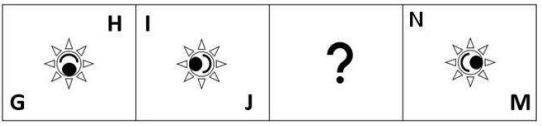
1336 064afb72e05e9e6f5582741bd
64afb72e05e9e6f5582741bd- 1false
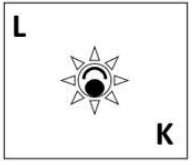
- 2false

- 3true

- 4false

- Show AnswerHide Answer
- Workspace
- SingleChoice
Answer : 3. "
"
Q: Who contributed to built the group of Osiyan Temples?
1336 06315e2bab0a2a82fc53a6353
6315e2bab0a2a82fc53a6353- 1Rathorasfalse
- 2Guhilasfalse
- 3Chavadasfalse
- 4Pratiharastrue
- Show AnswerHide Answer
- Workspace
- SingleChoice
Answer : 4. "Pratiharas"
Explanation :
1. Mahavir Jain Temple is built in Osian in Jodhpur district of Rajasthan.
2. Temple Oswal is an important pilgrimage site of the Jain community.
3. The temple is a place of pilgrimage for both Jains and Hindus.
4. It was built in 783 AD by King Vatsaraja during the Gurjara-Pratihara dynasty.
5. The Jain temple is dedicated to Mahavira and belongs to the Shwetambar sect of Jainism.
Q: Who was the Ruler of Jaipur state when treaties were signed with British in 1818?
1336 062e14de355271b3503351460
62e14de355271b3503351460- 1Maharaja Mann Singhfalse
- 2Maharana Bhim Singhfalse
- 3Rao Vishnu Singhfalse
- 4Sawai Jagat Singhtrue
- Show AnswerHide Answer
- Workspace
- SingleChoice
Answer : 4. "Sawai Jagat Singh "
Q: To take advantage of Mukhyamantri Anupriti Yojana, the annual income of the family should be _____.
1336 0634e5a656f29d63afda605c7
634e5a656f29d63afda605c7- 1less than 2.5 lakhsfalse
- 2less than 10 lakhsfalse
- 3less than 8 lakhstrue
- 4Less than 5 lakhsfalse
- Show AnswerHide Answer
- Workspace
- SingleChoice
Answer : 3. "less than 8 lakhs"
Q: Six tables and twelve chairs were bought for ₹ 7,800. If the average price of a table is ₹750, then the average price of a chair would be
1336 0653f82148e6628cb6daea96e
653f82148e6628cb6daea96e- 1₹ 250false
- 2₹ 275true
- 3₹ 150false
- 4₹ 175false
- Show AnswerHide Answer
- Workspace
- SingleChoice
Answer : 2. "₹ 275"
Explanation :

Q:Directions: Study the lowing information to answer the given questions
S, T, U, V, W, X, Y and Z are sitting in a straight line equidistant from each other (but not necessarily in the same order). Some of them are facing south while some are facing north.
(Note: Facing the same direction means, if one is facing north then the other also faces north and vice-versa. Facing the opposite directions means, if one is facing north then the other faces south and vice-versa)
S faces north. Only two people sit to the right of S. T sits third to the left of S. Only one person sits between T and X. X sits to the immediate right of W. Only one person sits between W and Z. Both the immediate neighbors of T face the same direction. U sits third to the left of X. T faces the opposite direction as S. Y does not sit at any of the extremes ends of the line. V faces the same direction as W. Both Y and U face the opposite direction of Z.
What is the position of X with respect to Z?
1336 064f0a8cd2bbb242750db47b8
64f0a8cd2bbb242750db47b8- 1Second to the leftfalse
- 2Third to the righttrue
- 3Third to the leftfalse
- 4Fifth to the rightfalse
- 5Second to the rightfalse
- Show AnswerHide Answer
- Workspace
- SingleChoice
Answer : 2. "Third to the right"
Q: A person invests a certain amount on simple interest. After 8 years he gets 16% interest. If he invests the same sum for 4 years, then he gets Rs. 9600 as interest, then the sum is
1336 064e5e57e646d8ab6ebd7ae4c
64e5e57e646d8ab6ebd7ae4c- 1Rs. 96000false
- 2Rs. 80000false
- 3Rs. 48000false
- 4Rs. 60000false
- 5None of thesetrue
- Show AnswerHide Answer
- Workspace
- SingleChoice
Answer : 5. "None of these "
Q:Read the following passage carefully and give the answer of following questions.
The problem of water pollution by pesticides can be understood only in context, as part of the whole to which it belongs – the pollution of the total environment of mankind. The pollution entering our waterways comes from many sources, radioactive wastes from reactors, laboratories and hospitals; fallout from nuclear explosions; domestic wastes from cities and towns; chemical wastes from factories. To these is a added a new kid of fallout - the chemical sprays applied to crop lands and gardens, forests and fields. Many of the chemical agents in this alarming melange initiate and augment the harmful effects of radiation, and within the groups of chemicals themselves there are sinister and little - understood interactions, transformations and summations of effect.
Ever since the chemists began to manufacture substances that nature never invented, the problem of water purification have become complex and the danger to users of water has increased. As we have seen, the production of these synthetic chemicals in large volume began in the 1940’s. It has now reached such proportion that an appalling deluge of chemical pollution is daily poured into the nation’s waterways. When inextricably mixed with domestic and other wastes discharged into the same water, these chemicals sometimes defy detection by the methods in ordinary use by purification plants. Most of them are so complex that they cannot be identified. In rivers, a really incredible variety of pollutants combine to produce deposits that sanitary engineers can only despairingly refer to as “gunk”.
Water pollution can only be understand:
1336 05f28f091921df8082891a051
5f28f091921df8082891a051- 1in relation to world contaminationtrue
- 2by the whole human racefalse
- 3in contextfalse
- 4in relation to the number of pesticides that exist.false
- Show AnswerHide Answer
- Workspace
- SingleChoice