


Non Verbal Reasoning Practice Question and Answer
8 Q: Four forms of a dice are shown below. In this dice is addition of it’s two opposite surface is 7. Which will be the right form of this dice in given forms?

3731 05d7f693fb4835d15d81fa60c
5d7f693fb4835d15d81fa60c- 1Afalse
- 2Btrue
- 3Cfalse
- 4Dfalse
- Show AnswerHide Answer
- Workspace
- SingleChoice
Answer : 2. "B"
Q: Directions: - A cube of 4x4x4cm. side colored with yellow. After that it cut into 1 cm small side cubes. Then answer the following question?
How many total numbers of small cubes are there?
3728 05ee339aaf72c0e153c81818f
5ee339aaf72c0e153c81818fHow many total numbers of small cubes are there?
- 116false
- 264true
- 38false
- 427false
- Show AnswerHide Answer
- Workspace
- SingleChoice
Answer : 2. "64 "
Q: Direction: - Which answer figure will complete the pattern in the question figure?

3723 15ee35ff7f72c0e153c827bdd
5ee35ff7f72c0e153c827bdd- 1Afalse
- 2Btrue
- 3Cfalse
- 4Dfalse
- Show AnswerHide Answer
- Workspace
- SingleChoice
Answer : 2. "B"
Q: How many triangles are there in the figure?

3698 15def5c455b0f1b05dcfcbf4b
5def5c455b0f1b05dcfcbf4b- 124false
- 214false
- 328true
- 420false
- Show AnswerHide Answer
- Workspace
- SingleChoice
Answer : 3. "28"
Q: A coloured cube is cut into smaller cubes if there are 8 colourless cubes, then how many smaller cubes are there?
3681 05e6341d8f1640a77574dc254
5e6341d8f1640a77574dc254- 164true
- 212false
- 324false
- 440false
- Show AnswerHide Answer
- Workspace
- SingleChoice
Answer : 1. "64"
Q: Two dice are rolled simultaneously. Find the probability of getting a total of 9. 3654 05b5cc7d1e4d2b41977751268
5b5cc7d1e4d2b41977751268- 11/3false
- 21/9true
- 38/9false
- 49/10false
- Show AnswerHide Answer
- Workspace
- SingleChoice
Answer : 2. "1/9"
Explanation :
Answer: B) 1/9 Explanation: S = { (1, 1), (1, 2), (1, 3), (1, 4),(1, 5), (1, 6), (2, 1), (2, 2),.........(6, 5), (6, 6) } => n(S) = 6 x 6 = 36 E = {(6, 3), (5, 4), (4, 5), (3, 6) } => n(E) = 4 Therefore, P(E) = 4/36 = 1/9
Q: From the given blocks when 10 is at the bottom, which number will be at the top?

3648 05f55e6b679cfd646ddcbcb6d
5f55e6b679cfd646ddcbcb6d- 16false
- 24false
- 38false
- 412true
- Show AnswerHide Answer
- Workspace
- SingleChoice
Answer : 4. "12"
Q: How many squares are there in the following figure?
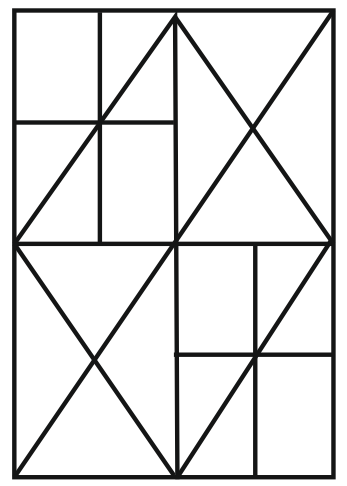
3636 05da6dacad8305e690883ca59
5da6dacad8305e690883ca59- 114true
- 213false
- 312false
- 416false
- Show AnswerHide Answer
- Workspace
- SingleChoice